
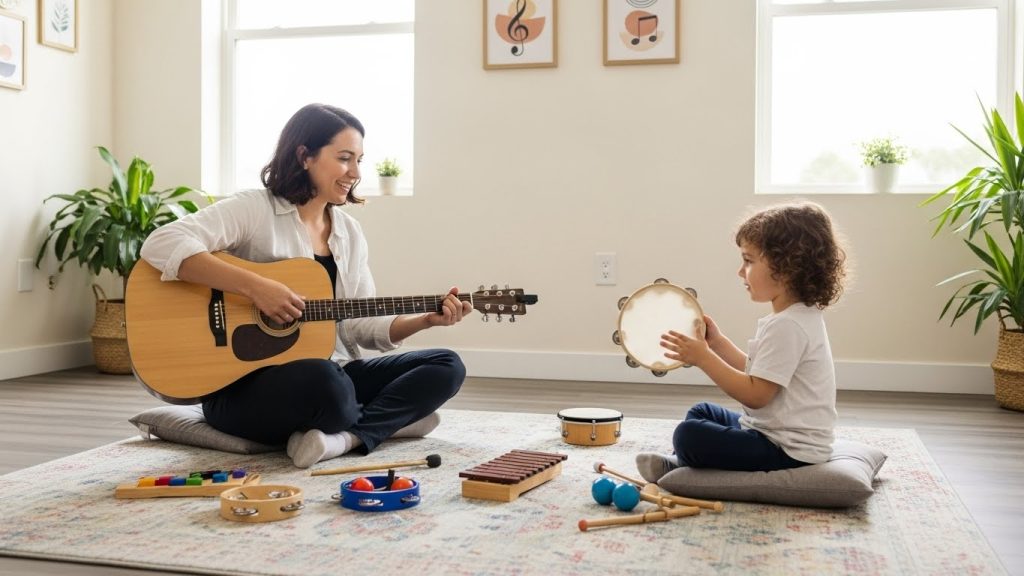
Music therapy is a therapeutic approach that uses music to support a person’s emotional, social, physical, and communication needs. It is delivered by a trained and registered music therapist who uses music in purposeful and structured ways to help individuals work towards their goals.
At Kita Therapy, music therapy is personalised to each individual. Music is used as a motivating and engaging tool to support development, wellbeing, and participation in everyday life.
What Does Music Therapy Look Like?
Music therapy sessions are interactive and tailored to the individual. Activities may include:
- Singing familiar or preferred songs
- Playing musical instruments
- Moving to music
- Listening to music
- Creating songs together
No musical experience is required. The focus is not on musical ability or performance — music is simply used as a tool to support therapeutic goals.
Who Can Benefit From Music Therapy?
Music therapy can support children, adolescents, and adults with a wide range of needs, including individuals who:
- Experience speech or communication difficulties
- Have emotional or behavioural challenges
- Have developmental delays or disabilities
- Benefit from support with attention, emotional regulation, or social skills
Music is naturally engaging and can help individuals participate in therapy in ways that feel enjoyable, meaningful, and motivating.
How Can Music Therapy Help?
Music therapy can support many areas of development, including:
- Communication skills – encouraging vocalisation, words, gestures, and turn-taking
- Social interaction – building connection, shared attention, and interaction with others
- Emotional expression and regulation – supporting emotional awareness and calming strategies
- Motor skills – developing coordination, movement, and body awareness
- Confidence and self-esteem – creating opportunities for choice, success, and independence
Therapy goals are always individualised and based on each person’s strengths, needs, and interests.
What Happens in a Music Therapy Session?
Music therapy sessions begin with understanding the individual’s goals, interests, and support needs. The therapist then plans music-based activities that support these goals in a safe, supportive, and engaging environment.
Sessions may be structured or flexible, depending on what works best for the individual. Music therapy can be provided in one-to-one sessions or in small groups.
How Is Music Therapy Different From Music Lessons?
Music therapy focuses on wellbeing, development, and participation — not learning to perform music. While music lessons aim to teach musical skills, music therapy uses music as a therapeutic tool to support communication, emotional regulation, social interaction, and overall development.
Who Provides Music Therapy?
Music therapy is delivered by a Registered Music Therapist (RMT). Registered music therapists have completed Australian Music Therapy Association (AMTA)–approved qualifications, typically at a postgraduate level. They also complete a supervised provisional year and ongoing professional development to maintain registration.
Registered music therapists are specifically trained to use music as a therapeutic intervention. Research shows that music therapy can positively support mood, communication, behaviour, thinking skills, and movement.
Music Therapy and the NDIS
Music therapy is recognised as an allied health support under the NDIS. It is funded under the Capacity Building – Improved Daily Living category when it is considered reasonable and necessary for a participant’s goals.
NDIS-funded music therapy must be delivered by a professional who is an Active Registered Music Therapist with AMTA, or by a therapy assistant working under their supervision.
It’s important to note that a registered music therapist refers to a clinician registered with AMTA. This is different from an NDIS registered provider, which refers to an organisation registered with the NDIS Quality and Safeguards Commission.
If you would like to learn more about music therapy, you can visit the Australian Music Therapy Association website here: https://www.austmta.org.au/about/about-music-therapy/