
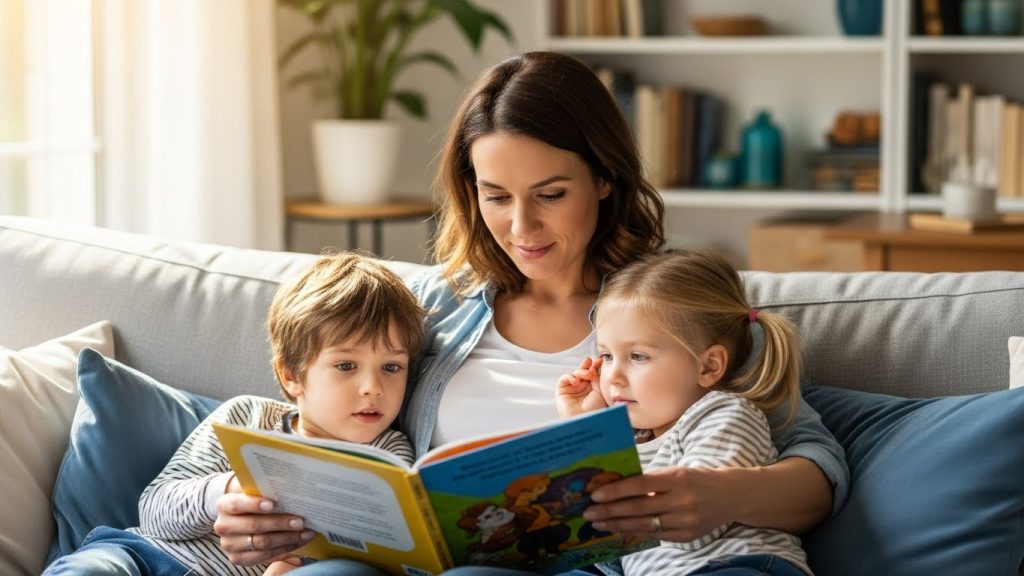
At Kita Therapy, we often encourage families to include book reading as part of their child’s speech therapy journey. Shared book reading is a simple, everyday activity that can play a powerful role in supporting your child’s speech, language, and communication development.
What Is Shared Book Reading?
Shared book reading is when you and your child look at a book together and interact around it. This may include talking about pictures, using gestures, asking simple questions, or following your child’s interests rather than reading every word on the page. In speech therapy, the focus is on creating opportunities for communication, not on reading the book “perfectly.”
How Does Book Reading Support Speech and Language?
Speech therapy aims to help children develop communication skills during everyday routines. Book reading is a valuable tool because it naturally supports:
- Vocabulary development
- Understanding and following language
- Attention and listening skills
- Use of gestures, sounds, words, or sentences
- Social communication skills such as turn-taking and joint attention
When parents use simple and supportive strategies during book reading, children often become more engaged and are more likely to communicate.
Helpful Strategies to Use During Book Reading
Before reading
- Say the title of the book and point to the words as you say them (e.g. “This book is called ___ and it’s written by ___.”)
- Ask a question to spark interest, such as “What do you see on the cover?” or “What do you think this book might be about?”
- Encourage imagination by expanding on your child’s ideas and responses.
During reading
- Talk about the pictures rather than reading every line of text
- Use positive and encouraging comments such as “I like how you’re helping turn the pages.”
- Point to, gesture toward, and label items your child is looking at
- Use both words and gestures to support attention (e.g. “You’re looking at the dog!”)
After reading
- Ask one short question or talk about something your child found interesting (e.g. “What did the character do?”)
- Relate the story to your child’s own experiences, such as “We saw something like that at the park.”
These strategies help children learn that their communication — whether it’s a look, sound, gesture, or word — is meaningful and valued.
What If My Child Isn’t Interested in Books?
Many children may not enjoy books straight away. You can support engagement by:
- Choosing books with textures, flaps, or interactive features
- Letting your child control how they explore the book, even if they turn pages quickly
- Trying book reading at a time when your child is calmer
- Keeping reading sessions short, relaxed, and positive
Even brief interactions with books can support communication development.
Happy reading!
About The Author

June Boon
June is a dual-qualified Music Therapist and Speech Pathologist who combines creativity with clinical expertise to support clients of all ages. Her compassionate, evidence-based sessions use music and speech therapy to help individuals communicate and express themselves confidently.